Understanding Beverage Production Line Architecture
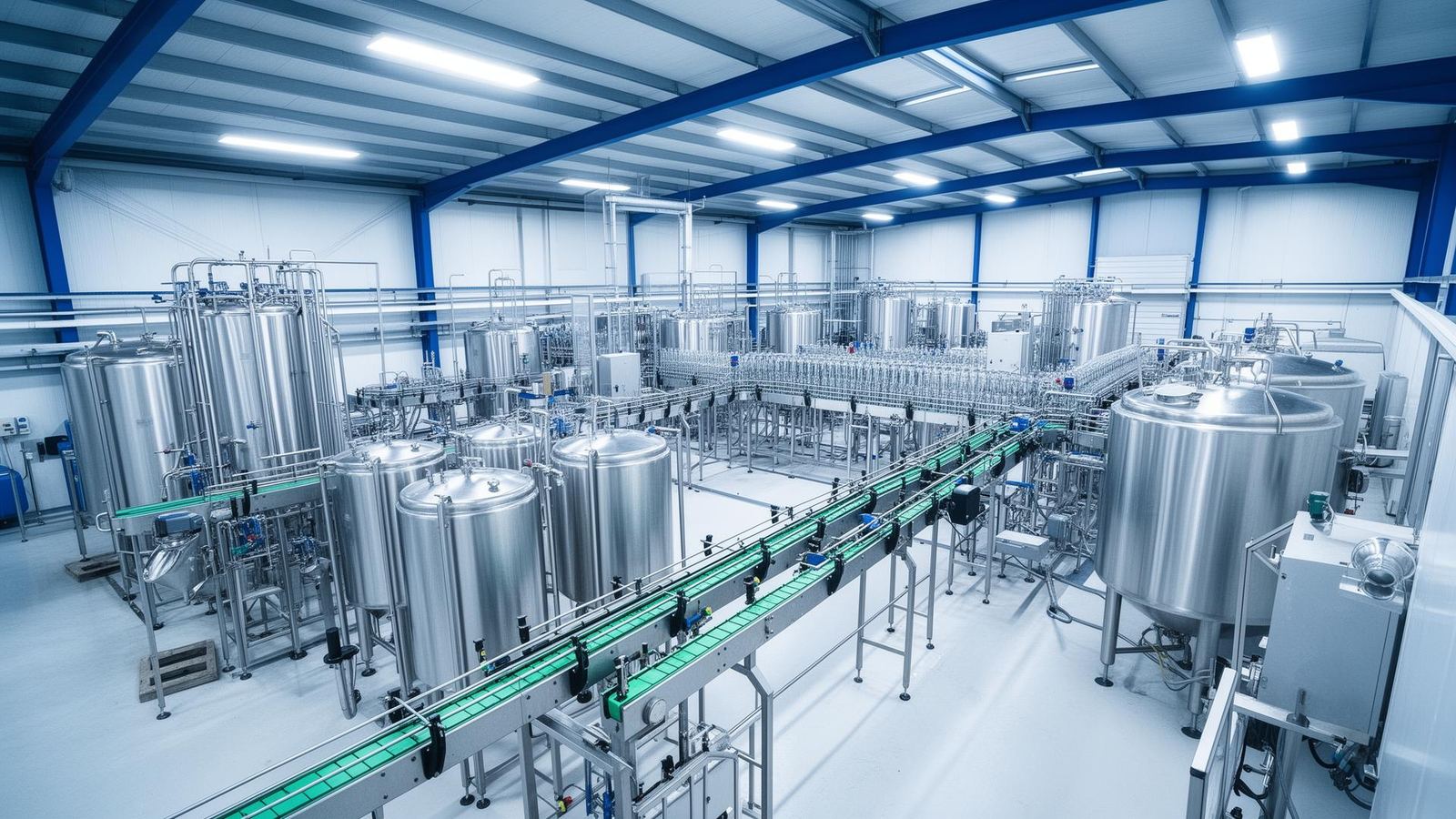
A beverage production line is a complex system of interconnected machines designed to transform raw materials into finished, packaged products ready for distribution. Whether filling water, beer, wine, juice, soft drinks, or specialty beverages, every production line follows the same fundamental sequence: product preparation, container preparation, filling, closing, labelling, quality inspection, and secondary packaging.
The complexity and cost of a beverage production line depend on the product type (still vs carbonated, ambient vs cold-chain), packaging format (PET, glass, can, carton), production speed, and level of automation. Used beverage production lines offer producers at every scale the opportunity to acquire established, industrially tested equipment at significantly reduced cost compared to new installations.
The global secondary market for beverage equipment is well-established, with major trading centres in Europe (Italy, Germany, Netherlands), North America, and increasingly Asia. Lines become available through capacity upgrades, plant consolidation, format changes, and business closures. Working with a specialised dealer like BottlingScout ensures access to documented equipment with transparent condition assessments.
Line Configuration by Beverage Type
Water: The simplest filling application. Still water uses gravity or electronic volumetric fillers; sparkling water requires isobaric technology. High speeds are achievable (up to 80,000+ BPH for PET). Water lines are the most commonly available in the used market.
Beer: Requires specialised filling technology to minimise oxygen pickup and maintain CO2 levels. Glass bottle lines widely used traditional markets; canning lines are growing rapidly (craft beer, export). Pasteurisation (tunnel or flash) is standard. Beer filling equipment is regularly available due to hygienic design requirements.
Wine: Uses vacuum or slight-vacuum filling technology for glass bottles. Lower speeds (2,000-10,000 BPH typically). Cork insertion, screw capping, or crown capping depending on market. Capsule application and multiple label stations are common. Used wine filling equipment is widely available from Italian, French, and Spanish sources.
Juice and Nectar: Requires either hot-fill technology (85-92°C) or aseptic cold-fill for ambient shelf life. Pulp-containing products need large-bore filling valves. Pasteurisation systems are essential. Used juice lines from Tetra Pak, Sidel, and Krones are available for various formats.
Soft Drinks (CSD): Counter-pressure filling with integrated carbonation and mixing systems. High-speed PET and can lines are standard. Syrup room equipment, water treatment, and CO2 storage are required auxiliary systems.
Dairy and Plant-Based: Ultra-clean or aseptic filling for extended shelf life. Specialised equipment from Tetra Pak, SIG, and Elopak. A niche segment in the used market.
Essential Support Systems
Beyond the core filling line, every beverage production facility requires critical support systems:
Water Treatment: Multi-stage treatment including sand filtration, activated carbon, reverse osmosis, UV sterilisation, and ozone treatment. Water quality directly impacts product quality. Used water treatment systems from Krones (Hydronomic), KHS, and specialised suppliers are available.
CIP (Clean-in-Place): Automated cleaning systems that circulate caustic, acid, and rinse water through product-contact surfaces. Essential for hygiene compliance and product changeovers. CIP systems from Alfa Laval, GEA, and Krones are standard.
Compressed Air: Oil-free compressed air at 7-40 bar depending on applications (blow moulding requires 25-40 bar). Atlas Copco, Kaeser, and CompAir are established manufacturer. Used compressors offer significant savings.
CO2 Systems: Storage tanks, evaporators, and distribution systems for carbonation and purging. CO2 quality must meet food-grade specifications.
Steam and Hot Water: Required for pasteurisation, CIP heating, and bottle washing. Industrial boilers from Viessmann, Buderus, or Clayton.
Electrical Infrastructure: Three-phase power distribution, motor control centres, and UPS systems for critical controls. Verify voltage and frequency compatibility when purchasing equipment from different regions.
Evaluating Complete Used Beverage Lines
Purchasing a complete used beverage production line requires systematic evaluation of every component:
Step 1 — Line assessment: Visit the installation site to observe the line running in production. Note actual speed, efficiency, downtime causes, and product quality. Request OEE (Overall Equipment Effectiveness) data for the past 12 months.
Step 2 — Individual machine evaluation: Inspect each machine independently. Key areas include: mechanical wear (bearings, gears, chains), pneumatic system condition, electrical panel quality, control system version, and safety guarding compliance.
Step 3 — Spare parts inventory: Request a complete list of installed spare parts and consumables. A well-maintained operation typically holds 12-18 months of spare parts stock. This inventory may be negotiable as part of the purchase.
Step 4 — Documentation: Ensure availability of: electrical schematics, mechanical drawings, PLC programs, HMI software, operating manuals, maintenance records, and CE conformity documentation.
Step 5 — Dismantling plan: Evaluate dismantling complexity and cost. Large beverage lines require professional dismantling crews, heavy lifting equipment, and careful logistics planning. Budget 4-8 weeks for complete line dismantling.
Step 6 — Transport and installation: International transport of complete beverage lines requires specialised logistics. Budget for containerisation, sea freight, customs clearance, and local transport to the installation site.
Investment Planning and ROI Analysis
Investing in a used beverage production line requires comprehensive financial planning beyond the equipment purchase price:
Total project cost typically includes:
- Equipment purchase: 50-60% of total investment
- Dismantling and transport: 10-15%
- Installation and commissioning: 15-20%
- Building/facility modifications: 5-10%
- Spare parts and consumables: 3-5%
- Training and start-up support: 2-3%
Typical total project costs by segment:
- Small water/juice operation (5,000-10,000 BPH): €300,000-€700,000
- Medium multi-product facility (15,000-30,000 BPH): €800,000-€2,500,000
- Large brewery or soft drink plant (40,000+ BPH): €2,000,000-€8,000,000+
ROI advantages of used equipment: The 40-60% cost saving compared to new equipment translates directly to faster payback periods. A used line achieving 85% OEE typically delivers ROI within 2-4 years for well-planned operations.
Risk mitigation: Working with an experienced dealer reduces risk through: technical pre-inspection, guaranteed condition documentation, installation support, and access to the dealer network for replacement components if issues arise.
BottlingScout provides comprehensive project support from initial line selection through installation and commissioning, serving as a single point of contact for complete beverage production line acquisitions.
Frequently asked questions
How long does it take to install a used beverage production line?
Complete line installation typically takes 8-16 weeks including dismantling (4-6 weeks), transport (2-4 weeks), installation (4-8 weeks), and commissioning (1-2 weeks). Timelines vary based on line complexity, site readiness, and transport distance.
Can used equipment meet modern food safety standards?
Yes. Used equipment from reputable manufacturers meets hygienic design principles. However, older equipment may need updates for current regulations (CE marking, safety guarding). Stainless steel product-contact surfaces maintain their food-safety properties indefinitely with proper cleaning.
What is the best beverage segment for used equipment investment?
Water bottling offers the simplest entry point with the most available equipment. Beer and soft drink lines provide higher margins but require more complex equipment. The optimal segment depends on your market opportunity, technical expertise, and available capital.
Should I buy a complete line or assemble from individual machines?
Complete lines from one source guarantee integration and typically cost less per machine. Assembled lines offer more flexibility in specification but require interface engineering. For first-time buyers, complete lines are recommended for simplicity and reliability.