Glass bottling lines serve very different products, but they share one priority: stable handling of a rigid, fragile container. Correct transfers, pressure control, bottle inspection and closure application determine both line efficiency and package quality.
Returnable or one-way glass
Returnable bottles may require depalletizing, decrating, washing, empty-bottle inspection and crate handling. One-way glass usually follows a simpler route but still needs dust removal or rinsing and careful control of incoming bottle quality. Define the process before comparing line offers.
Match filling technology to the product
Wine, still water and some food liquids commonly use gravity, low-vacuum or volumetric filling. Beer, sparkling wine and carbonated soft drinks require pressure-controlled isobaric filling. Confirm product temperature, dissolved gas, foaming behaviour, hygiene regime and desired oxygen management.
Closures and finishing
A glass line may apply crown caps, aluminium screw caps, natural corks, synthetic closures or mushroom corks with wirehoods. The closure determines capper or corker tooling, level control and downstream equipment. Labels may be self-adhesive, cold-glue, hot-glue or sleeve, with orientation and coding requirements.
Inspect the container path
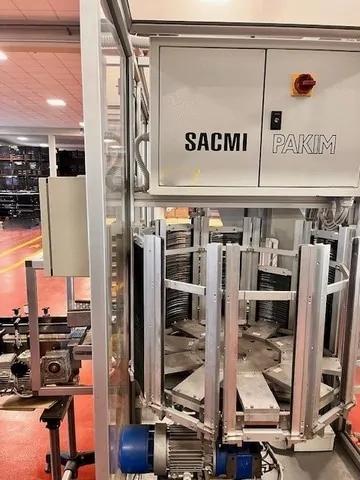
- Check worms, stars, guides and dead plates for the proposed diameters and heights.
- Review washer discharge and bottle thermal shock where applicable.
- Verify fill-level, closure and label inspection devices.
- Inspect conveyor wear, lubrication and accumulation pressure.
- Confirm case, tray, shrink-pack and pallet patterns.
Safety, breakage and cleaning
Look for guards, broken-bottle management, drainage and access for cleaning. Assess glass-fragment control around the filler and product-contact zone. For pressure equipment, confirm documentation and applicable inspection obligations in the destination country.
Acceptance criteria
Specify the exact bottle, closure and product for the test. Measure net output, rejects, breakage, fill accuracy, closure quality and line stops over an agreed period. Record settings so the result can be reproduced after relocation.
Review used glass bottling lines and individual fillers, cappers and labellers in the catalogue.
Frequently asked questions
Can a wine line be converted for beer?
Sometimes, but filling technology, pressure rating, product preparation, closure, hygiene and controls must all be assessed. It is not a simple format change.
Why inspect conveyors carefully?
Poor glass handling causes breakage, noise and stops even when the main machines are in good condition.