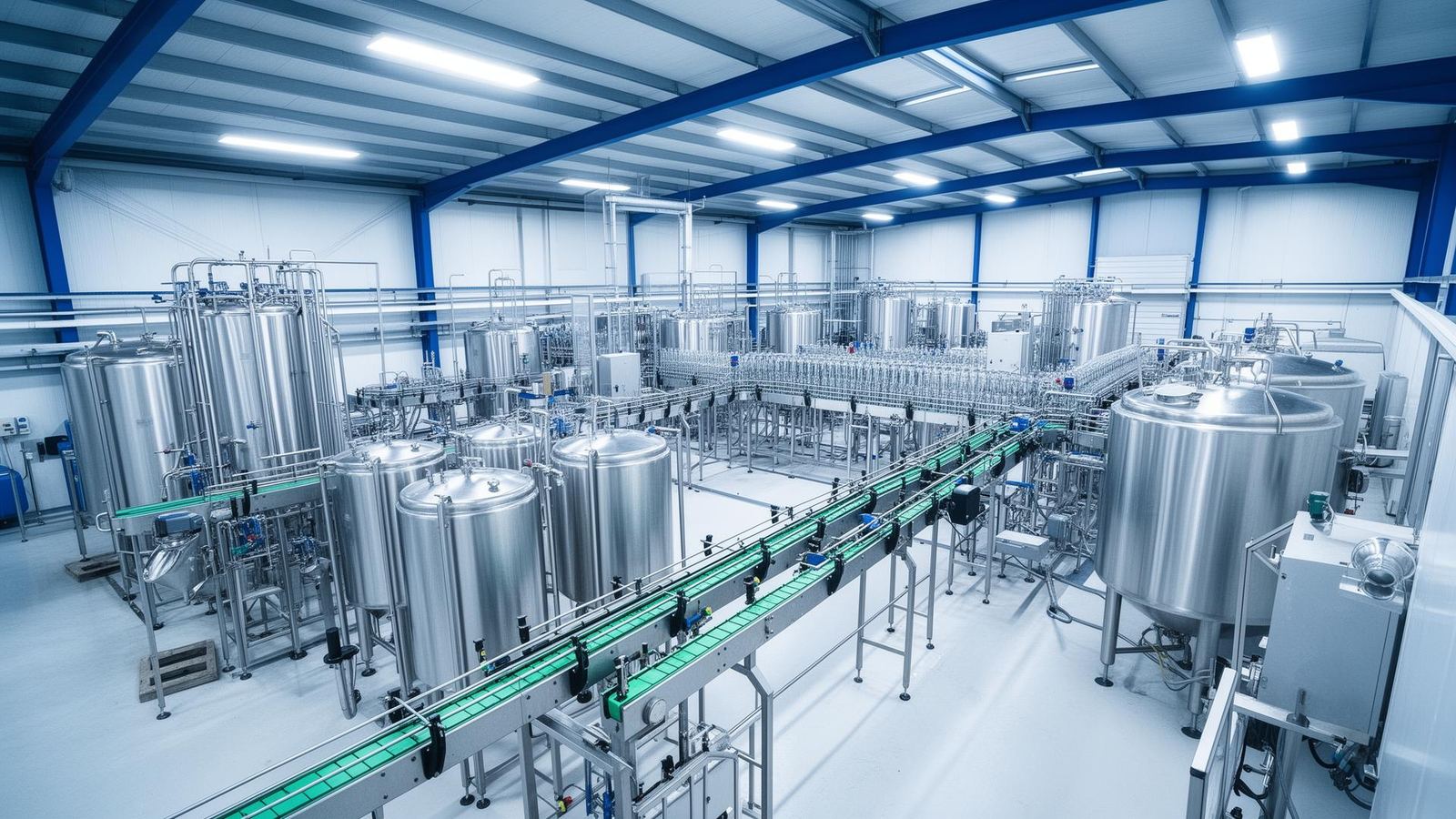
A used PET bottling line must be designed as one air, bottle and product system. Blow moulding output, air conveyors, filler handling and downstream accumulation must remain balanced across every bottle format.
Define the PET package
Confirm preform weight, resin, neck finish, bottle geometry, nominal volume, base design and closure. Lightweight bottles can require dedicated guides, low-pressure handling and careful transfer geometry. Never assume that an existing mould or neck finish is compatible without drawings and samples.
Blow moulding and high-pressure air
Check the blow moulder’s cavity count, oven condition, spindle wear, stretch rods, mould cooling and installed control versions. Define compressor capacity, air quality, pressure, cooling water and recovery systems. Compressor performance must be evaluated at site conditions and for the heaviest bottle format.
Filling and hygiene
Still water, carbonated soft drinks, juice and sensitive products use different preparation and filling concepts. Verify product-contact materials, cleaning circuits, valve design, bowl pressure and any microbiological safeguards. The filler, capper and closure feed must be assessed together.
Transport and line balance
- Review air-conveyor neck guides and blower discharge.
- Confirm bottle transfers through rinser, filler, labeller and packer.
- Check accumulation before and after critical machines.
- Validate pack patterns, film specifications and pallet configuration.
- Calculate the net line output after normal micro-stops.
Formats, moulds and changeovers
Obtain a complete inventory of moulds, shells, guides, stars, screws and closure parts. Compare every item with the proposed bottle drawings. Missing format equipment can materially affect both budget and delivery time.
Utilities and relocation
PET projects are sensitive to compressed-air and cooling infrastructure. Record electrical loads, low- and high-pressure air, water temperatures, ventilation and floor requirements. During dismantling preserve cable identification, recipes, parameter backups and mould records.
Explore used PET bottling lines, blow moulding machines and related filling equipment.
Frequently asked questions
Can one PET line run many bottle sizes?
Often yes, but each size must be checked for preform, mould, neck, transfer, label, pack and pallet compatibility.
What is the most overlooked utility?
High-pressure air is frequently underestimated. Required flow and pressure must be calculated for the actual bottle and production speed.