Autore: BottlingScout Admin

  • Spare Parts for Bottling and Filling Machines: Essential Components and Sourcing Guide

    Why Spare Parts Matter in Bottling Operations

    Bottling and filling lines operate at high speeds — often 10,000 to 72,000 bottles per hour — with tight tolerances and continuous mechanical stress. In this environment, component wear is inevitable. Having the right spare parts available is the difference between a 30-minute repair and a multi-day production stop. For used equipment especially, spare parts availability is a critical factor in the purchase decision.

    A well-managed spare parts inventory covers three categories: critical spares (parts whose failure stops the line), wear parts (components with predictable replacement intervals), and consumables (seals, lubricants, filters replaced during routine maintenance).

    Filling Machine Spare Parts

    Filling Valves and Nozzles

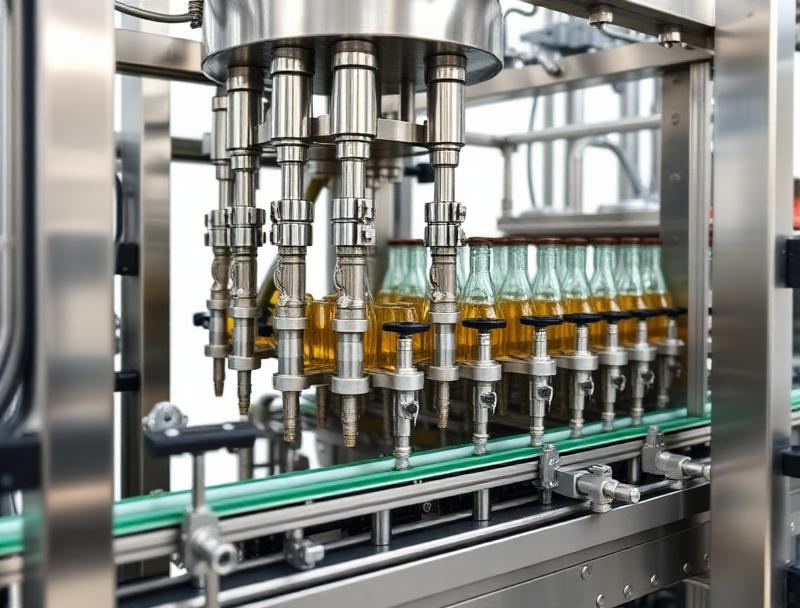
    Filling valves are the core precision components of any filler. They control the flow of product into each container and must maintain accurate fill levels across thousands of cycles per hour. Common spare valve components include valve membranes (for membrane-type volumetric fillers), valve seats, springs, O-rings, and electronic flow meters for mass flow fillers.

    • Gravity filler valves: replacement vent tubes, float valves, and gaskets
    • Pressure filler valves: counter-pressure seals, gas channels, snift valves
    • Volumetric filler valves: piston seals, cylinder liners, check valves
    • Hot-fill valves: thermal expansion seals, PTFE gaskets, CIP-compatible seats

    Rotary Distributor and Swivel Joints

    The rotary distributor (or rotary union) is the component that transfers product, CIP fluids, and gases from the stationary supply lines to the rotating carousel. It is subject to continuous rotational wear. Key spare parts include mechanical seals, carbon rings, ceramic faces, and bearing sets. A leaking rotary distributor can contaminate product and compromise hygiene.

    Blow Moulder Spare Parts

    PET blow moulders operate under extreme mechanical and thermal stress. Stretch rods, blow nozzles, and preform heating lamps are high-turnover spare parts. Moulds themselves are format-specific but may require replacement of wear components such as mould bottom inserts, locking pins, and compensation pads. Valve blocks controlling the pre-blow and final blow pressures contain seals and solenoid valves that degrade over time.

    • Stretch rods and rod tips: direct contact with hot preforms causes gradual wear
    • IR heating lamps: rated for 5,000–8,000 hours, regular replacement is planned
    • Blow nozzles and seals: prevent air leakage during the blow cycle
    • Mould locking mechanisms: pins, springs, and cam followers subject to fatigue

    Capping Machine Spare Parts

    Cappers apply closures under controlled torque or pressure. Wear parts include capping chucks (the tooling that grips the cap), magnetic clutch discs, torque springs, snap-on plungers, and cap sorting components in the cap elevator. For ROPP (Roll-On Pilfer-Proof) cappers, the threading rollers and knives are consumable items that require periodic replacement.

    Labelling Machine Spare Parts

    Labelling machines — whether self-adhesive, hot-melt, or cold-glue — rely on precision dispensing and cutting components. Common spares include cutting blades, glue rollers, vacuum drums, label sensors (photocells), and drive belts. For self-adhesive labellers, peeling edges and pressure rollers wear over time and affect label placement accuracy.

    Universal Components Across All Machines

    • Bearings (ball, roller, linear): critical for all rotating and reciprocating components
    • Drive belts and timing belts: transfer motion between motors and driven components
    • Sensors and encoders: proximity sensors, photoelectric cells, rotary encoders for positioning
    • Pneumatic components: cylinders, solenoid valves, FRL units, tubing and fittings
    • Electrical components: contactors, frequency drives (VFDs), PLCs, HMI screens
    • Stainless steel fasteners: bolts, nuts, washers in food-grade materials

    Sourcing Spare Parts for Used Equipment

    When purchasing used bottling machinery, spare parts availability should be verified before committing. Key questions include: Is OEM support still available for this model? Are third-party compatible parts manufactured? Does the machine use proprietary or standard components? BottlingScout provides technical guidance on spare parts sourcing for all major manufacturers and can connect buyers with specialised parts suppliers in Europe, Asia, and the Americas.

    For obsolete or discontinued models, aftermarket manufacturers can often produce compatible parts from technical drawings or reverse-engineered specifications. Our network includes suppliers specialising in legacy Krones, KHS, Sidel, Simonazzi, and Sasib equipment.

    Frequently asked questions

    What are the most commonly replaced parts on a filling machine?

    The most frequently replaced parts are filling valve seals (O-rings, membranes), rotary distributor seals, sensors and flow meters, drive belts, and bearings. These are considered wear parts with predictable replacement intervals based on operating hours.

    Can I get spare parts for discontinued bottling machines?

    Yes. Many aftermarket suppliers manufacture compatible parts for discontinued models from Krones, KHS, Sidel, Simonazzi, and other brands. Parts can often be produced from technical drawings or reverse-engineered from existing components. BottlingScout can help locate suitable suppliers.

    How should I manage spare parts inventory for a bottling line?

    Maintain a structured inventory divided into three tiers: critical spares (parts that stop the line — keep on-site), planned wear parts (order on schedule based on operating hours), and consumables (seals, filters, lubricants — keep buffer stock). Review and update the list annually based on maintenance records.

    Are OEM spare parts always necessary?

    Not always. Many standard components (bearings, seals, sensors, belts) can be sourced from general industrial suppliers. However, precision components like filling valves, capping chucks, and proprietary electronic modules typically require OEM or certified aftermarket parts to maintain performance and hygiene standards.

  • Bottle Formats in Beverage Production: PET, Glass, Can, and Specialty Containers

    Understanding Bottle Formats

    In beverage production, a bottle format defines the complete geometric and functional specification of a container: its material, volume, height, body diameter, neck finish, weight, and closure type. Every machine in a bottling line — from the blow moulder to the packer — is configured around these parameters. Understanding bottle formats is essential for selecting compatible used equipment, planning format changeovers, and evaluating line flexibility.

    The global beverage industry uses hundreds of distinct bottle formats, but they fall into well-defined families based on material type and application. The major families are PET (polyethylene terephthalate), glass, aluminium cans, and specialty containers (carton, pouch, bag-in-box).

    PET Bottle Formats

    PET is the dominant material in water, soft drinks, juices, and increasingly in dairy, edible oil, and spirits. PET bottles are produced by stretch blow moulding from injection-moulded preforms. The preform defines the neck finish and bottle weight; the blow mould defines the final shape and volume.

    Parameter Typical Range Notes
    Volume 200 ml – 10 L Most common: 500 ml, 1 L, 1.5 L, 2 L
    Neck Finish PCO 1810, PCO 1881, 28 mm, 30/25, 38 mm PCO 1881 is the global standard for carbonated beverages
    Bottle Weight 8 g – 45 g Lightweighting trend: 500 ml water bottles now under 10 g
    Body Diameter 50 mm – 120 mm Determines star wheel and guide rail format
    Height 150 mm – 400 mm Affects conveyor top guides and label position

    The neck finish is the most critical format parameter because it determines preform compatibility, gripper sizing, capping tooling, and closure selection. The PCO 1881 (26.7 mm thread) has become the global standard for carbonated soft drinks, replacing the older PCO 1810. For still water, the 30/25 and 28 mm finishes are widely used. Each neck finish requires dedicated grippers, blow nozzles, and capping chucks.

    Glass Bottle Formats

    Glass remains the preferred material for beer, wine, spirits, premium juices, and returnable bottle markets. Glass bottles are not blow-moulded on the filling line — they arrive ready-formed and are handled by body rather than neck. Key format parameters include volume, crown diameter (for beer), cork/screw finish (for wine and spirits), and the body profile (round, square, oval).

    Category Common Volumes Closure Type
    Beer 250 ml, 330 ml, 500 ml, 750 ml Crown 26 mm, swing-top, screw
    Wine 375 ml, 750 ml, 1.5 L Natural cork, screw cap (ROPP 30×60)
    Spirits 200 ml, 500 ml, 700 ml, 1 L T-cork, bar-top, GPI 400, ROPP
    Returnable 200 ml, 330 ml, 500 ml, 1 L Crown 26 mm

    Returnable glass bottles add complexity because the line must handle multiple wear states of the same format. Bottle inspection, washing, and sorting systems must accommodate slight dimensional variations from repeated use cycles. Lines designed for returnables (common in Germany, Central Europe, and Africa) include additional equipment that single-trip glass lines do not require.

    Can Formats

    Aluminium and steel cans are the fastest-growing beverage packaging format globally, driven by sustainability perception and suitability for craft beverages. Standard can formats are defined by their nominal diameter and height.

    Format Name Dimensions (diameter × height) Volume Typical Use
    Sleek 200 52 mm × 111 mm 200 ml Energy drinks, mixers
    Slim 250 53 mm × 168 mm 250 ml Energy drinks, RTD cocktails
    Standard 330 66 mm × 115 mm 330 ml Beer, soft drinks
    Standard 500 66 mm × 168 mm 500 ml Beer
    King 568 66 mm × 194 mm 568 ml (1 pint) Beer (UK market)

    Can filling lines handle format changes differently than bottle lines. The filler itself often accommodates multiple can diameters with simple guide adjustments, but the seamer requires lid-specific change parts (seaming rolls, chuck profiles) and the packer must be reconfigured for the new can height and tray layout.

    Impact on Line Configuration and Used Equipment Selection

    When evaluating used bottling equipment, the format range is a primary selection criterion. Key questions include: What formats has the machine been configured for? Are the change parts included in the sale? Can additional format sets be sourced? What is the minimum and maximum container size the machine can physically handle?

    • Blow moulders: limited by preform size, mould cavity count, and oven configuration
    • Fillers: limited by carousel diameter, valve spacing, and container height range
    • Cappers: limited by chuck size range and closure type (screw, crown, snap, ROPP)
    • Labellers: limited by label drum configuration and container diameter range
    • Packers: limited by pack pattern, tray dimensions, and container stability

    BottlingScout Format Advisory

    Selecting the right used equipment for your target formats requires technical knowledge of machine specifications, available change parts, and format limitations. BottlingScout provides format compatibility analysis for all listed equipment. Our team can verify whether a specific machine can handle your container format, identify required change parts, and estimate the investment needed for format extensions.

    Contact us with your bottle specifications and production requirements for a free format compatibility assessment.

    Frequently asked questions

    What is a bottle neck finish?

    A neck finish is the standardised thread and sealing surface specification at the top of a bottle. It defines the preform (for PET), the closure type, and the gripper dimensions. Common PET finishes include PCO 1881 (carbonated drinks), 30/25 (still water), and 38 mm (large formats). Glass uses crown (26 mm), cork, or screw (ROPP) finishes depending on the product category.

    How many bottle formats can a single filling line handle?

    Most modern filling lines can handle 3–8 different bottle formats with appropriate change parts. The practical limit depends on the machine design, available change parts, and acceptable changeover time. Some fillers and labellers offer tool-free adjustment for a continuous size range, while others require physical part swaps for each format.

    What determines which change parts are needed for a new format?

    The key container dimensions that drive change part requirements are: body diameter (star wheels, guide rails), neck finish diameter (grippers, capping chucks), container height (conveyor guides, label position), and closure type (capping heads). Each machine in the line has its own set of format-dependent components.

    Can I add a new bottle format to existing used equipment?

    In most cases, yes. If the new format falls within the machine physical range (min/max diameter, height, and weight), additional change parts can usually be sourced from the OEM or aftermarket suppliers. BottlingScout can assess format compatibility and help source the required parts.

    What is the difference between Sleek, Slim, and Standard can formats?

    These names refer to the can diameter and height. Standard cans (66 mm diameter) are used for mainstream beer and soft drinks in 330 ml and 500 ml sizes. Slim cans (53 mm) are taller and narrower, popular for energy drinks and RTD beverages. Sleek cans (52 mm) are a compact format used for smaller volumes like 200 ml mixers and energy shots.

  • Used Wine Bottling Lines: Equipment Guide for Wineries and Cellars

    Wine cellar with oak barrels ready for bottling
    Modern wineries require efficient bottling lines to handle seasonal production peaks

    Why Wineries Choose Used Bottling Equipment

    Wine production is inherently seasonal. Most wineries bottle their entire annual production within a few concentrated weeks, making the investment in brand-new bottling equipment difficult to justify economically. A used wine bottling line from established manufacturers such as Bertolaso, GAI, Della Toffola, Krones, or AVE Industries offers established technology at 40–60% below new equipment cost, with immediate availability instead of 12–18 month lead times.

    The global secondary market for wine bottling equipment is particularly active, with well-maintained machines regularly becoming available as wineries upgrade to higher capacities or change container formats. Understanding what to look for — and what to avoid — is essential for making a sound investment.

    Core Components of a Wine Bottling Line

    A complete wine bottling line differs from standard beverage lines in several critical ways. Wine requires gentle handling to prevent oxidation, specialised closure systems (natural cork, synthetic cork, screw cap, or glass stopper), and materials compatible with wine acidity and alcohol content.

    Machine Function Wine-Specific Requirements
    Depalletiser Unloads empty bottles from pallets Gentle handling for premium glass bottles
    Rinser Cleans bottles before filling Nitrogen or inert gas rinsing option for premium wines
    Filler Fills bottles with wine Gravity or slight vacuum filling; counter-pressure for sparkling wine
    Cork inserter / Capper Applies closure Cork compression quality; ROPP head for screw caps
    Capsule applicator Applies tin, PVC, or polylaminate capsules Heat-shrink or rolling heads depending on capsule type
    Labeller Applies front, back, and neck labels Precision placement for premium presentation
    Case packer Packs bottles into cartons Gentle handling to prevent label damage
    Wine bottles on a modern bottling line conveyor
    A well-configured wine bottling line handles the entire process from empty bottle to packed case

    Filling Technology for Wine

    Wine filling technology must balance speed with product protection. The primary concern is minimising dissolved oxygen pickup during the filling process, as oxygen exposure degrades wine quality and shortens shelf life.

    Gravity Filling

    Gravity fillers remain the most common technology for still wine. The wine flows from an elevated tank through the filling valve into the bottle by gravity alone, without mechanical pumping. This gentle process minimises foaming and oxygen pickup. Used gravity fillers from manufacturers such as Bertolaso, GAI, and Enoberg are widely available and represent excellent value for wineries producing 1,000 to 5,000 bottles per hour.

    Vacuum and Slight-Vacuum Filling

    Vacuum fillers create a partial vacuum in the bottle before filling, which further reduces oxygen contact. This technology is preferred for premium wines and wines with low sulphite levels that are more sensitive to oxidation. Slight-vacuum systems from manufacturers such as Krones and MBF offer a good compromise between protection and cost.

    Isobaric Filling for Sparkling Wine

    Sparkling wines (Champagne, Prosecco, Cava, Sekt) require counter-pressure filling to maintain carbonation. The bottle is pressurised to match the wine pressure before filling begins. Used isobaric fillers from Bertolaso, GAI, or MBF are highly sought after due to the significant cost difference compared to new equipment.

    Cork Inserter Evaluation

    The cork inserter (corker) is arguably the most critical machine in a wine bottling line. Cork quality and insertion precision directly affect wine ageing potential and consumer experience. When evaluating a used cork inserter, check jaw compression uniformity, cork delivery chute alignment, and vacuum level consistency if equipped with pre-evacuation.

    • Jaw condition: inspect compression jaws for wear grooves that cause uneven cork compression
    • Vacuum system: verify vacuum pump condition and sealing integrity for pre-evacuation systems
    • Cork handling: check magazine capacity, cork orientation mechanism, and rejection system for damaged corks
    • Speed capability: ensure rated speed matches or exceeds your filler output
    • Sparkling wine: for mushroom cork insertion, verify cage wire application (wirehooder) compatibility

    What Wineries Search For: Key Equipment Categories

    Based on market analysis, wineries most frequently search for the following used equipment categories:

    • Used wine filling machine 1000–3000 BPH for small to medium wineries
    • Used cork inserter / corking machine for natural cork and synthetic closures
    • Used capsule applicator (shrink capsule or rolling capsule machine)
    • Used wine labelling machine (self-adhesive, front-back-neck label application)
    • Used wine filtration equipment (crossflow, tangential, plate and frame filters)
    • Used complete wine bottling line (turnkey mono-bloc or individual machines)
    • Used wine tank equipment (stainless steel tanks, temperature-controlled fermentation)
    Quality inspection of wine bottles on a production line
    Quality control is essential at every stage of the wine bottling process

    Seasonal Production Planning

    Unlike continuous beverage production, wine bottling follows a seasonal pattern. Most wineries bottle 80% of their production within 8–12 weeks. This means equipment may sit idle for months, making the economic case for used equipment even stronger. A pre-owned line that has been properly maintained and serviced between seasons can deliver decades of reliable service.

    When purchasing used equipment, verify the total running hours rather than just the age of the machine. A 15-year-old wine bottling line that has operated only during seasonal campaigns may have fewer running hours than a 5-year-old soft drink line running 16 hours per day.

    Material Compatibility

    Wine is acidic (pH 2.9–3.9) and contains alcohol (8–16% ABV). All product-contact materials must be compatible with these conditions. Verify that gaskets are made from EPDM or food-grade silicone (not NBR, which can degrade in alcohol contact). Stainless steel grades should be AISI 304 minimum, with AISI 316L preferred for components in prolonged wine contact.

    Frequently asked questions

    How much does a used wine bottling line cost?

    A small used wine bottling line (1,000–2,000 BPH) typically costs €30,000–€80,000. Medium-capacity lines (3,000–5,000 BPH) range from €80,000–€200,000. High-speed lines (8,000+ BPH) with complete automation can exceed €300,000. Prices depend on condition, manufacturer, and included format parts.

    What capacity wine bottling line do I need?

    For small wineries producing up to 100,000 bottles per year, a 1,000–1,500 BPH line is sufficient. Medium wineries (100,000–500,000 bottles) need 2,000–4,000 BPH. Large wineries exceeding 1 million bottles per year typically require 5,000–10,000 BPH or higher.

    Can I use the same bottling line for still and sparkling wine?

    Not directly. Still wine uses gravity or vacuum filling, while sparkling wine requires isobaric (counter-pressure) filling. Some manufacturers offer dual-purpose fillers, but these are more expensive. Most wineries producing both types use separate filling equipment.

    How long does it take to set up a used wine bottling line?

    Installation typically takes 3–6 weeks including mechanical setup, electrical connection, and commissioning. Add 1–2 weeks for operator training. Mobile bottling units can be operational within 1–2 days but are a different market segment.

  • Used Water Bottling Plant Equipment: Mineral and Spring Water Production Lines

    PET water bottles on a production line conveyor
    Water bottling requires high-speed, hygienic equipment to maintain product purity

    The Water Bottling Equipment Market

    Bottled water is the worlds largest beverage category by volume, and demand continues to grow globally. Setting up a water bottling plant — whether for natural mineral water, spring water, purified water, or flavoured water — requires significant capital investment. Used water bottling equipment from manufacturers such as Sidel, Krones, KHS, SIPA, SMI, and Newamstar can reduce initial investment by 40–60% while delivering equivalent production capability.

    Water bottling lines are predominantly PET-based, although glass bottles remain popular in the premium and HoReCa (hotel, restaurant, catering) segments. The vast majority of water bottling operations worldwide use PET containers ranging from 200ml to 10 litres.

    Complete Water Bottling Line Configuration

    A typical water bottling plant includes the following equipment chain. Each stage must maintain hygienic standards to preserve water purity from source to consumer.

    Stage Equipment Critical Parameters
    Water treatment Filtration, UV, ozone systems Microbial control, mineral content preservation
    Preform storage Preform hoppers and elevators Dust-free handling, static control
    Blow moulding PET blow moulder Oven temperature uniformity, mould condition
    Filling Gravity or pressure filler Fill accuracy, hygienic design, CIP capability
    Capping Screw capper Torque consistency, cap feeding reliability
    Labelling Self-adhesive or shrink sleeve Label placement accuracy, sleeve shrink uniformity
    Coding Inkjet or laser Print quality, batch traceability
    Packing Shrink wrapper or tray packer Film quality, pack integrity
    Palletising Automatic palletiser Layer pattern flexibility, stack stability

    PET Blow Moulding for Water Bottles

    The PET blow moulder is often the most expensive single machine in a water bottling line. Used blow moulders from Sidel (SBO series), Krones (Contiform), KHS (InnoPET Blomax), and SIPA represent substantial savings. When evaluating used blow moulders, focus on oven lamp condition, stretch rod alignment, high-pressure air valve integrity, and mould cavity wear.

    Modern water bottling production hall with PET lines
    High-speed water bottling lines can produce 40,000 bottles per hour or more

    Water Filling Technology

    Still Water Filling

    Still water uses gravity or slight-pressure filling technology. Modern volumetric fillers with electromagnetic flowmeters provide high accuracy (±0.5%) at speeds up to 80,000 BPH. Used gravity fillers from manufacturers like Krones (Modulfill VOC), Sidel, and KHS offer excellent value for still water applications.

    Sparkling Water Filling

    Carbonated water requires counter-pressure (isobaric) filling, similar to beer and soft drinks. The filler must handle CO₂ under pressure without excessive foaming. Used isobaric fillers from Krones, KHS, and other manufacturers are available but command higher prices than still-water fillers due to more complex valve technology.

    What Water Producers Search For

    • Used water bottling plant complete — turnkey water production line
    • Used PET blow moulder for water bottles — SBO, Contiform, or equivalent
    • Used water filling machine — gravity or volumetric filler for still water
    • Used mineral water bottling line — complete line for natural mineral water
    • Used 5-litre / 10-litre water filling machine — large format water containers
    • Used water bottle labelling machine — shrink sleeve or self-adhesive
    • Used water treatment equipment — reverse osmosis, UV sterilisation, ozonation
    • Used carbonated water filling line — isobaric filler for sparkling water

    Hygiene and Regulatory Requirements

    Water bottling is subject to strict regulatory oversight in most jurisdictions. Equipment must support compliance with regulations such as EU Directive 2009/54/EC for natural mineral water, FDA 21 CFR 165 in the US, or equivalent national standards. When purchasing used equipment, verify that hygienic design meets current standards: product-contact surfaces must be smooth (Ra ≤ 0.8 µm), all connections should be sanitary fittings, and the CIP system must reach all product-contact areas.

    Frequently asked questions

    How much does a used water bottling plant cost?

    A small used water bottling plant (2,000–4,000 BPH) typically costs €80,000–€200,000 including blow moulder, filler, capper, and labeller. Medium plants (8,000–15,000 BPH) range from €200,000–€500,000. High-speed plants (20,000+ BPH) can exceed €1,000,000 depending on configuration.

    Do I need a blow moulder for water bottling?

    If using PET bottles, yes — unless you purchase pre-blown bottles from a supplier, which increases per-bottle cost. Most water bottling plants above 3,000 BPH include an integrated blow moulder for economic efficiency. For small operations, buying pre-blown bottles and using only a filler-capper can be a lower-investment starting point.

    What water treatment do I need before bottling?

    This depends on your water source. Natural mineral water typically requires only UV treatment and filtration. Purified water requires reverse osmosis, activated carbon filtration, and UV or ozone treatment. Always test your source water and design treatment accordingly.

    Can I bottle still and sparkling water on the same line?

    Some fillers can handle both, but switching between still and carbonated modes requires changeover time. Many producers operate dedicated lines for each product type to maximise efficiency.

  • Used Olive Oil Filling and Bottling Equipment: Guide for Oil Producers

    Olive oil production with fresh olives and bottled product
    Olive oil bottling requires specialised filling technology for viscous, high-value products

    Olive Oil Bottling: Specialised Requirements

    Olive oil — particularly extra virgin olive oil (EVOO) — is a high-value, viscous, and oxidation-sensitive product that demands specialised bottling equipment. Unlike water or carbonated beverages, olive oil filling requires volumetric or mass flow measurement for accuracy, materials compatible with edible oils, and packaging that protects against light and oxygen.

    The olive oil industry is highly seasonal, with production concentrated in the 3–4 months following harvest (October–January in the Northern Hemisphere). This seasonality makes used equipment particularly attractive, as machines may accumulate relatively few running hours per year despite their calendar age.

    Filling Technology for Olive Oil

    Volumetric Piston Fillers

    Piston fillers are the traditional choice for olive oil. Each filling cycle draws a precise volume through a cylinder and piston mechanism. Used piston fillers from manufacturers such as Bertolaso, Enoberg, Fimer, Perrier, and MBF are widely available. Key evaluation points: piston seal condition, cylinder bore wear, and check valve functionality.

    Mass Flow Fillers

    Modern mass flow (weight-based) fillers use load cells or Coriolis meters to fill by weight rather than volume. This provides consistent accuracy regardless of temperature-related viscosity changes. Manufacturers including Krones, KHS, and Serac offer these systems. Used mass flow fillers are regularly available but deliver better filling consistency.

    Gravity and Overflow Fillers

    For standard olive oil grades (not EVOO), gravity fillers with heated product tanks can be used. The oil is heated to 25–30°C to reduce viscosity and improve flow characteristics. Overflow fillers provide consistent cosmetic fill levels but are less common for oil due to the cleaning challenges of oil residue in overflow return circuits.

    Close-up of industrial filling machine components
    Precision filling valve components are critical for accurate oil dosing

    Container Options for Olive Oil

    Olive oil is packaged in various container types, each requiring different equipment configurations:

    • Glass bottles (250ml–1L): Premium positioning, requires careful handling. Dark glass preferred for light protection
    • PET bottles (500ml–5L): Lightweight, lower cost, but limited oxygen barrier without special coatings
    • Tin cans (1L–5L): Excellent light and oxygen protection, traditional in Mediterranean markets
    • Bag-in-box (3L–20L): Growing segment for food service and bulk retail
    • Stainless steel containers: Premium and speciality market

    What Oil Producers Search For

    • Used olive oil filling machine — volumetric or weight-based filler for edible oils
    • Used oil bottling line — complete line for olive oil, sunflower oil, or seed oils
    • Used edible oil capping machine — screw capper for oil bottle closures
    • Used oil labelling machine — front-back labeller for oil bottles
    • Used tin can filling machine for oil — can filling and seaming for oil
    • Used bag-in-box filling machine — aseptic or standard BIB filler for oils
    • Used oil filtration equipment — plate filter, cartridge filter for olive oil
    • Used stainless steel tanks for oil storage — food-grade oil storage vessels

    Material Compatibility and Cleaning

    Oil residue is notoriously difficult to clean from equipment surfaces. All product-contact materials must be oil-compatible: PTFE or EPDM gaskets (not silicone, which can absorb oil), stainless steel AISI 304 or 316L for all wetted parts, and CIP systems capable of removing oil films with appropriate alkaline detergents at elevated temperatures. When evaluating used oil filling equipment, inspect for oil residue in dead legs, gasket deterioration, and CIP system effectiveness.

    Frequently asked questions

    How much does a used olive oil filling line cost?

    Small used olive oil filling lines (500–1,500 BPH) typically cost €25,000–€60,000. Medium lines (2,000–4,000 BPH) range from €60,000–€150,000. Prices depend heavily on filling technology (piston vs mass flow), condition, and included format parts.

    Can I use the same filling machine for olive oil and vinegar?

    Generally no without modifications. While both are liquids, vinegar is highly acidic and corrosive, requiring acid-resistant materials (316L stainless steel, PTFE gaskets). An oil filler may work for vinegar if all product-contact materials are verified as acid-compatible, but dedicated lines are recommended.

    What filling accuracy should I expect for olive oil?

    Modern piston fillers achieve ±0.5–1% accuracy by volume. Mass flow fillers achieve ±0.2–0.5% by weight. For regulatory compliance and cost control, accuracy within ±1% is generally acceptable for commercial olive oil production.

    Do I need special equipment for extra virgin olive oil?

    EVOO requires the same filling equipment as standard olive oil, but with additional attention to oxygen management (nitrogen blanketing of tanks and headspace), temperature control (filling below 25°C to preserve polyphenols), and clean-in-place procedures to prevent flavour carryover.

  • Used Vinegar and Condiment Filling Equipment: Acid-Resistant Bottling Lines

    Vinegar bottles in various formats and sizes
    Vinegar and condiment bottling requires acid-resistant materials throughout the production line

    Vinegar Bottling: Corrosion-Resistant Equipment

    Vinegar production — whether wine vinegar, apple cider vinegar, balsamic vinegar, or distilled white vinegar — presents unique equipment challenges due to the highly corrosive nature of acetic acid. Standard food-grade stainless steel (AISI 304) is not suitable for prolonged vinegar contact. All product-contact surfaces must be AISI 316L stainless steel or higher alloy, with PTFE or EPDM gaskets rated for acetic acid exposure.

    The market for used vinegar bottling equipment is smaller than for beverages, but machines from manufacturers specialising in aggressive liquids — such as Perrier, Fimer, Bertolaso, Enoberg, and CFT — are periodically available. Properly evaluated used equipment can serve for decades in vinegar applications.

    Critical Material Requirements

    Component Standard Beverage Vinegar / Acid Products
    Tank material AISI 304 AISI 316L minimum
    Valve seats Standard food-grade PTFE or Hastelloy
    Gaskets Silicone or NBR EPDM or PTFE (acid-resistant)
    Pump type Standard centrifugal Chemical-duty or PTFE-lined
    Piping Standard sanitary 316L with electropolished surfaces
    Sensors Standard industrial Acid-resistant housings and elements

    Filling Technologies for Vinegar

    Vinegar is typically filled using volumetric piston fillers or gravity fillers. The low viscosity of most vinegar products makes filling relatively straightforward from a mechanical perspective. The challenge lies entirely in material compatibility and corrosion resistance.

    For balsamic vinegar and other premium products, filling accuracy is critical due to the high product value. Weight-based filling with load cells provides the best accuracy for these products.

    What Vinegar and Condiment Producers Search For

    • Used vinegar filling machine — acid-resistant filler for acetic acid products
    • Used acid-resistant bottling line — complete line with 316L construction
    • Used balsamic vinegar bottling equipment — precision filler for premium vinegar
    • Used sauce filling machine — volumetric filler for liquid condiments
    • Used soy sauce bottling line — filling equipment for fermented condiments
    • Used dressing filling machine — dosing equipment for emulsified products
    • Used condiment capping machine — screw capper for sauce and vinegar bottles
    • Used acid-resistant labelling machine — labeller for vinegar bottles
    • Used glass bottle filling line for condiments — complete condiment packaging
    Technical consultation for industrial equipment evaluation
    Expert evaluation of material compatibility is essential when purchasing used equipment for acidic products

    Cleaning and Maintenance Considerations

    Equipment used for vinegar requires more frequent inspection for corrosion than standard beverage lines. Even 316L stainless steel can develop pitting corrosion over time with continuous acetic acid exposure. Establish an inspection schedule that includes visual examination of all wetted surfaces, gasket condition checks, and pump seal verification at regular intervals.

    Frequently asked questions

    Can I use standard food-grade equipment for vinegar?

    Standard AISI 304 stainless steel will corrode within months of continuous vinegar contact. All product-contact surfaces must be AISI 316L minimum. Gaskets must be EPDM or PTFE — silicone and NBR gaskets degrade rapidly in acetic acid. Always verify material certificates before purchasing used equipment for vinegar applications.

    How much does a used vinegar bottling line cost?

    Small used vinegar lines (500–1,500 BPH) cost €20,000–€50,000. However, acid-resistant construction commands a 20–30% premium over equivalent standard beverage equipment. A complete medium-speed line (2,000–4,000 BPH) with 316L construction typically costs €60,000–€120,000.

    Can I bottle vinegar and oil on the same line?

    This is generally not recommended. Oil residue is extremely difficult to remove from equipment, and any oil contamination in vinegar affects product quality. If you must share equipment, implement rigorous CIP procedures with alkaline detergent between product changes. Dedicated lines are strongly preferred.

  • Used Dairy and Milk Filling Equipment: UHT, ESL, and Fresh Milk Bottling Lines

    Quality control in dairy production environment
    Dairy filling requires the highest levels of hygienic design and microbiological control

    Dairy Filling Equipment: Hygiene-First Engineering

    Milk and dairy products are among the most microbiologically sensitive foods. Filling equipment for dairy must meet the most stringent hygienic design standards in the food industry. Used dairy filling lines from manufacturers such as Tetra Pak, GEA, Krones, Elopak, SIG Combibloc, and Serac offer established technology at reduced investment, but require particularly careful evaluation of hygienic condition and sterilisation system integrity.

    The dairy equipment market is segmented by product type: fresh milk, ESL (extended shelf life) milk, UHT milk, yogurt, cream, and flavoured dairy drinks. Each product requires different filling conditions, from ultra-clean to fully aseptic.

    Dairy Filling Categories

    Product Filling Environment Shelf Life Typical Equipment
    Fresh pasteurised milk Ultra-clean 7–14 days (refrigerated) Clean-fill bottle or carton filler
    ESL milk Ultra-clean or aseptic 21–45 days (refrigerated) Micro-filtration + clean fill
    UHT milk Fully aseptic 6–12 months (ambient) Aseptic carton or bottle filler
    Yogurt (set/stirred) Clean fill 21–35 days (refrigerated) Cup filler with dosing system
    Cream Ultra-clean 14–21 days (refrigerated) Volumetric filler with temperature control
    Flavoured milk Ultra-clean or aseptic Varies by treatment As per base product requirements

    UHT Processing Equipment

    Ultra-high temperature (UHT) processing heats milk to 135–150°C for 2–4 seconds, achieving commercial sterility. Used UHT plants from GEA, Tetra Pak, and APV/SPX are high-value assets that require expert evaluation. Check heat exchanger plate condition, holding tube integrity, and homogeniser valve wear. UHT equipment has long service life if properly maintained.

    What Dairy Producers Search For

    • Used UHT milk processing plant — complete ultra-high temperature treatment line
    • Used milk filling machine — aseptic or clean-fill for dairy products
    • Used Tetra Pak filling machine — TBA or TFA series for carton packaging
    • Used yogurt filling machine — cup filler and lid sealer for dairy desserts
    • Used cream filling equipment — volumetric filler for cream and sour cream
    • Used dairy homogeniser — high-pressure homogeniser for milk processing
    • Used milk pasteuriser — plate heat exchanger for dairy pasteurisation
    • Used CIP system for dairy — automated cleaning for dairy production
    • Used dairy separator — centrifugal separator for cream separation
    • Used cheese processing equipment — vats, presses, and moulding equipment
    Industrial rotary filling machine for dairy applications
    Rotary fillers with enclosed filling zones provide the hygienic environment required for dairy products

    Hygienic Design Verification

    When purchasing used dairy equipment, hygienic design is non-negotiable. Inspect all product-contact surfaces for pitting, scratching, or roughening that could harbour bacteria. Surface finish should be Ra ≤ 0.8 µm on product-contact areas. Check all welded joints for smooth orbital welds without crevices. Verify that all gaskets are in food-grade condition without compression set or swelling.

    The sterilisation system is critical: for aseptic equipment, verify the H₂O₂ (hydrogen peroxide) spray system, steam barriers, and sterile air supply. These systems require calibration and validation documentation. Missing documentation significantly reduces the value and usability of used aseptic dairy equipment.

    Frequently asked questions

    How much does a used UHT milk line cost?

    Used UHT processing plants (excluding filling) typically cost €150,000–€500,000 depending on capacity and condition. Complete UHT filling lines including Tetra Pak or bottle filling can range from €300,000 to over €1,000,000. Individual UHT filling machines start from €80,000–€200,000.

    Can I use standard beverage equipment for milk?

    No. Milk requires equipment specifically designed for dairy hygiene standards, including food-grade surface finishes (Ra ≤ 0.8 µm), dairy-specific CIP protocols, and appropriate filling environment classification. Standard beverage fillers lack the hygienic design features required for safe dairy production.

    What is the difference between clean fill and aseptic fill for dairy?

    Clean fill operates in a controlled but not sterile environment, suitable for pasteurised products with refrigerated distribution. Aseptic fill uses a fully sterile filling zone with pre-sterilised containers, enabling ambient shelf life. Aseptic equipment is significantly more complex and expensive than clean-fill alternatives.

  • Format Changeover Parts for Bottling Lines: Star Wheels, Screws, Guide Rails and More

    What Are Format Changeover Parts?

    Format changeover parts — also called change parts or format sets — are the mechanical components inside a bottling line that must be physically swapped when switching from one bottle shape or size to another. Every machine in a filling line is designed around a specific container geometry: its diameter, height, neck finish, and body profile. When production moves from a 500 ml PET bottle to a 1.5 L format, or from a round glass bottle to a square one, dozens of individual parts across multiple machines need to be replaced.

    These parts are precision-engineered to handle, guide, grip, and position each specific container format through every stage of the process — from depalletising and rinsing through filling, capping, labelling, and final packaging. Without the correct change parts, the line cannot operate safely or at rated speed.

    Star Wheels (Transfer Stars)

    Star wheels are the most recognisable format-dependent component on any rotary bottling machine. They are rotating disc-shaped elements with precisely machined pockets that receive, transport, and release containers between machine stations. Each pocket is contoured to match the exact body diameter and profile of a specific bottle format.

    • Infeed stars: receive containers from the conveyor and position them into the machine carousel
    • Outfeed stars: extract containers from the carousel and transfer them to the next conveyor section
    • Transfer stars: move containers between two adjacent machines (e.g. filler to capper)
    • Multi-level stars: grip containers at multiple heights for improved stability during high-speed transfer

    Star wheels are typically made from stainless steel (AISI 304 or 316) or high-density polyethylene (HDPE/PE-UHMW) depending on the application. For PET lines running above 20,000 bph, lightweight polymer stars with replaceable pocket inserts are common to reduce inertia and allow rapid changeover.

    Feed Screws (Coclee / Worm Screws)

    Feed screws — known as coclee in Italian — are helical screw-shaped components positioned at machine infeeds to space containers at precise intervals before they enter the star wheel. The screw pitch and profile are calculated to match a specific container diameter, ensuring each bottle arrives at exactly the right moment to be picked up by the star pocket.

    A mismatched feed screw causes jams, missed picks, and potential container damage. For every new bottle format, a new feed screw with the correct pitch, diameter, and length must be installed. Modern systems from Krones (Contiform), Sidel (Matrix), and KHS use quick-change screw mounts with tool-free clamping to reduce downtime.

    Guide Rails and Side Guides

    Guide rails run along conveyors and through machine sections to keep containers aligned and upright during transport. They must be adjusted — or replaced entirely — for each bottle format to match the container width and height. Adjustable guide rail systems with handwheel or servo-driven positioning can handle a range of formats without physical part changes, but fixed guides offer more stability at very high speeds.

    • Top guides: prevent bottles from tipping during acceleration/deceleration zones
    • Side guides: maintain lateral alignment on straight and curved conveyor sections
    • Base guides: support the bottom edge of unstable containers (e.g. lightweight PET)
    • Neck guides: support PET bottles by the neck ring in air conveyor sections

    Grippers, Clamps, and Neck Handling Components

    In PET bottling lines, containers are frequently handled by their neck finish rather than the body. Grippers and clamps must be precisely matched to the neck diameter and ring profile. A 28 mm PCO finish requires a different gripper geometry than a 38 mm BERICAP closure. Blow moulders, rinsers, and fillers all rely on format-specific grippers.

    Gripper changeover is critical for lines that run multiple neck finishes. Systems from Sidel and SIPA offer modular gripper cassettes that can be swapped in minutes. For glass lines, body clamps replace neck grippers and must match the bottle shoulder and waist profile.

    Capping Heads and Chuck Sets

    Capping machines require format-specific components for each closure type. Screw cappers need chuck sets matched to the cap diameter and thread pitch. Snap-on cappers, crown cappers, and ROPP cappers each have dedicated tooling per cap size. A typical format change on a rotary capper involves replacing 12–72 individual chuck inserts depending on the number of capping heads.

    Labeller Change Parts

    Labelling machines require bottle plates (piattelli), centring bells (campane di centraggio), and label drums or vacuum drums sized for each container format. Self-adhesive labellers may also need different label dispensing positions. For wrap-around labellers, the glue roller distance and cutting length must be adjusted per label and bottle size.

    How BottlingScout Can Help

    Finding the correct format changeover parts for used bottling equipment can be challenging, especially for older machines where OEM parts are no longer readily available. BottlingScout connects buyers with suppliers who stock or manufacture compatible change parts for major brands including Krones, Sidel, KHS, SIPA, Sacmi, SMI, and others. Whether you need a single feed screw, a complete star wheel set, or custom-machined grippers for a discontinued model, our network can assist.

    Contact our technical team for assistance sourcing format parts, verifying compatibility, or planning a format extension for your existing line.

    Frequently asked questions

    What are format changeover parts in bottling?

    Format changeover parts (also called change parts or format sets) are the mechanical components that must be physically replaced or adjusted when a bottling line switches from one container size or shape to another. They include star wheels, feed screws, guide rails, grippers, capping chucks, and labeller plates.

    How long does a format changeover take?

    A full format changeover on a complete bottling line typically takes 2–8 hours depending on the number of machines, the degree of automation, and whether quick-change systems are installed. Modern servo-driven systems can reduce this to under 1 hour for pre-configured formats.

    Can I get change parts for older or discontinued machines?

    Yes. Many specialised suppliers manufacture compatible change parts for older machines from Krones, KHS, Sidel, and other brands. BottlingScout can help connect you with suppliers who stock or produce these components, even when OEM support has ended.

    What is a feed screw (coclea) in bottling?

    A feed screw (coclea in Italian, Einlaufschnecke in German) is a helical screw positioned at the infeed of a rotary machine. It spaces containers at precise intervals to match the star wheel pocket pitch. Each bottle format requires a dedicated feed screw with the correct pitch and diameter.

    Are star wheels universal or format-specific?

    Star wheels are format-specific. Each pocket is machined to match a particular container diameter and profile. Some modern systems use adjustable star wheels with replaceable pocket inserts, but most high-speed applications require dedicated stars per format.

  • Used Juice Filling Lines: Hot Fill, Aseptic, and Tetra Pak Alternatives

    Fresh orange juice production facility
    Juice production requires specialised thermal treatment and filling technology to ensure product safety and shelf life

    Juice Production Equipment Overview

    Fruit juice, nectar, and smoothie production requires equipment that can handle thermally sensitive, pulpy, or viscous products while ensuring microbiological safety. The choice between hot fill, aseptic cold fill, or carton-based packaging (Tetra Pak, SIG Combibloc) fundamentally shapes the entire production line configuration and investment level.

    Used juice filling equipment from manufacturers such as Krones, KHS, Sidel, GEA, Tetra Pak, SIG, and others offers established producers and new entrants the opportunity to access established technology at reduced cost. The secondary market for juice equipment is particularly active as the industry evolves toward lighter packaging and cold-chain alternatives.

    Filling Technologies for Juice

    Hot Fill Technology

    Hot filling is the most widely used preservation method for juice in PET and glass bottles. The product is heated to 85–95°C and filled hot into containers, which are then inverted to sterilise the closure area, and cooled. Hot fill is economical, established, and does not require sterile filling environments. However, PET bottles for hot fill must be heat-set, resulting in heavier bottles than standard PET.

    Used hot fill lines from Krones, KHS, and Sidel are regularly available. Key evaluation points: heating system condition (plate or tubular heat exchanger), fill valve seal integrity at elevated temperatures, and bottle handling for heat-set PET containers.

    Aseptic Cold Fill

    Aseptic filling sterilises the product and container separately, then fills in a sterile environment. This allows the use of lightweight standard PET bottles and preserves heat-sensitive vitamins and flavours better than hot fill. Aseptic fillers from Sidel (Aseptic Predis), Krones (Asept), and GEA are complex machines that require rigorous maintenance and validation.

    Used aseptic fillers are less common on the secondary market and are regularly available. They require qualified personnel for operation and validation, making them more suitable for larger producers with established quality teams.

    Fruit juice bottles being filled on a production line
    Hot fill technology remains the most accessible method for juice producers entering the market

    Carton Packaging (Tetra Pak Alternatives)

    Carton-based aseptic packaging (Tetra Pak, SIG Combibloc, Elopak) is widely used in the ambient juice market globally. While Tetra Pak machines are widely used, the secondary market for these machines is limited by proprietary packaging material requirements and service agreements. Producers seeking alternatives to Tetra Pak-style packaging often consider PET bottles with hot fill or aseptic technology.

    Pasteurisation Equipment for Juice

    All commercial juice requires pasteurisation for safety and shelf life. The two main approaches are:

    Method Temperature / Time Application Equipment
    Flash pasteurisation 95°C for 15–30 seconds Before filling (hot fill or aseptic) Plate or tubular heat exchanger
    Tunnel pasteurisation 65–75°C for 20–30 minutes After filling (in-bottle/in-can) Tunnel pasteuriser
    UHT treatment 135–150°C for 2–4 seconds Ambient shelf life products Tubular or scraped surface heat exchanger

    What Juice Producers Search For

    • Used juice filling machine — hot fill or aseptic filler for fruit juice
    • Used hot fill bottling line — complete PET line for ambient juice
    • Used flash pasteuriser — plate heat exchanger for juice pasteurisation
    • Used fruit processing equipment — extraction, centrifuge, filtration
    • Used Tetra Pak machine — carton filling equipment for juice
    • Used aseptic filling line — sterile cold fill for juice and smoothies
    • Used juice mixing system — blending, dosing, and preparation equipment
    • Used UHT plant — ultra-high temperature processing for juice
    • Used glass bottle juice line — hot fill for premium glass packaging
    • Used smoothie filling equipment — handling of pulpy and viscous products
    Modern beverage bottling production line
    Complete juice filling lines integrate pasteurisation, filling, capping, and labelling in a continuous process

    Product-Specific Considerations

    Different juice products present different challenges for filling equipment:

    • Clear juice (apple, grape): Standard filling valves, easy to handle, minimal special requirements
    • Pulpy juice (orange with pulp): Requires filling valves with larger passages, special pumps, and stirred tanks to prevent pulp separation
    • Smoothies and thick products: Need positive displacement pumps, wide-bore valves, and may require heated product lines to maintain flow
    • Concentrated juice: High sugar content requires materials resistant to sugar crystallisation and thorough CIP protocols
    • Organic juice: Equipment must support segregation protocols and thorough cleaning between organic and conventional runs

    Energy Efficiency in Juice Production

    Thermal processing is the largest energy cost in juice production. When evaluating used equipment, check heat recovery systems. Modern pasteurisers recover 90–95% of thermal energy through regeneration sections. Older equipment without effective heat recovery can consume 2–3 times more energy. A well-maintained used pasteuriser with good heat recovery can be more economical than a lower-cost unit without this feature.

    Frequently asked questions

    How much does a used juice filling line cost?

    Small used hot fill lines (2,000–4,000 BPH) typically cost €100,000–€250,000. Medium lines (6,000–12,000 BPH) range from €250,000–€600,000. Aseptic lines command significant premiums, often 2–3 times the cost of equivalent hot fill lines. Prices vary based on included pasteurisation equipment and automation level.

    Is hot fill or aseptic better for juice?

    Hot fill is simpler, lower cost, and suitable for most ambient juice products. Aseptic provides better flavour and vitamin retention, allows lighter PET bottles, but requires higher investment and more complex operation. For new entrants, hot fill is typically recommended as the entry point.

    Can I bottle juice and water on the same line?

    Technically possible but not recommended for high-volume production. Juice requires thorough CIP between runs, and hot fill equipment is overbuilt for water. Many producers operate separate lines for juice and water products. However, for small operations, a single line with proper changeover procedures can handle both.

    What shelf life can I achieve with hot fill juice?

    Hot fill juice in properly sealed PET or glass containers typically achieves 6–12 months shelf life at ambient temperature. Factors affecting shelf life include pasteurisation adequacy, headspace oxygen, container barrier properties, and storage conditions.

  • Used Brewery Bottling and Canning Lines: Equipment for Beer Producers

    Stainless steel fermentation tanks in a modern brewery
    Brewery equipment investments must balance production capacity with product quality requirements

    The Brewery Equipment Market

    The craft beer revolution has created unprecedented demand for used bottling and canning equipment. New breweries entering the market, and established craft producers scaling up, frequently turn to the secondary equipment market to acquire filling lines at accessible price points. Used brewery equipment from manufacturers such as Krones, KHS, Comac, CFT, Criveller, and Wild Goose offers documented performance at significantly lower capital outlay.

    Beer presents unique technical challenges compared to other beverages: it is carbonated, oxygen-sensitive, temperature-sensitive, and contains live yeast in unfiltered products. These factors make equipment selection particularly important for beer producers.

    Canning vs Bottling: Choosing the Right Format

    The shift toward cans in the craft beer industry has been dramatic. Cans offer complete light protection, faster chilling, lower transport weight, and higher recycling rates. However, glass bottles remain dominant in many European and premium markets.

    Factor Glass Bottles Aluminium Cans
    Light protection Amber glass offers moderate protection Complete light barrier — ideal for hop-forward beers
    Oxygen barrier Good with proper crown cap application Excellent when seam quality is maintained
    Transport cost Higher weight increases logistics cost 30–40% lighter reduces transport expense
    Consumer perception Premium, traditional image Modern, craft-forward image
    Equipment cost (used) More widely available, lower entry cost Growing availability, moderate cost
    Format flexibility Multiple bottle sizes available Standard 330ml, 440ml, 500ml cans
    Craft beer canning line in operation
    Canning lines have become a common choice for many craft breweries due to effective product protection

    Key Equipment for Beer Bottling Lines

    Beer Filling Machines

    Beer fillers must handle carbonated product under pressure while minimising oxygen pickup. Counter-pressure (isobaric) filling is standard: the bottle is first pressurised with CO₂ to match the product pressure, then filled against this counter-pressure to prevent foaming. Used isobaric fillers from Krones (Modulfill, Volumetic), KHS (Innofill), or smaller manufacturers like Comac and CFT are regularly available.

    Can Seaming Machines

    For canning lines, the seamer is the critical quality point. A poorly adjusted seamer causes leaking cans and oxygen ingress. When evaluating used seamers, inspect seaming rollers for wear, check seam analysis reports, and verify that the machine is compatible with your can size. Manufacturers include Angelus, Ferrum, Pneumatic Scale Angelus, and Wild Goose.

    Pasteurisation Equipment

    Tunnel pasteurisers are essential for beer producers who want shelf-stable product without sterile filtration. Used tunnel pasteurisers from Krones, KHS, Sander Hansen, and others represent significant value — new tunnel pasteurisers are among the most expensive components of a complete beer line.

    What Breweries Search For

    • Used beer filling machine — counter-pressure filler for glass bottles
    • Used craft beer canning line — complete can filling and seaming system
    • Used keg filling machine — automatic keg washer and filler
    • Used tunnel pasteuriser for beer — thermal treatment for shelf stability
    • Used beer filtration system — DE filter, crossflow, or centrifuge
    • Used bottle rinser for brewery — rinser compatible with returnables
    • Used crown capper — high-speed crown cap applicator
    • Used brewery labelling machine — self-adhesive labeller for beer bottles
    • Used CIP system for brewery — cleaning-in-place for beer production

    Oxygen Management in Used Equipment

    Total package oxygen (TPO) is the single most important quality parameter in beer packaging. Excessive oxygen causes stale flavours, colour changes, and reduced shelf life. When evaluating used filling equipment for beer, specifically check: pre-evacuation system condition, CO₂ flushing nozzle alignment, filler bowl oxygen management, and foam detection sensors. A well-maintained used filler can achieve TPO levels below 50 ppb — comparable to new equipment.

    Technical inspection of industrial brewery equipment
    Thorough mechanical inspection is essential before purchasing any used brewery equipment

    Capacity Planning for Breweries

    Brewery capacity requirements vary enormously. A craft brewery producing 5,000 hectolitres per year needs a very different line than a regional brewery producing 500,000 hl. The table below provides general guidance:

    Annual Production Recommended Line Speed Typical Configuration
    1,000–5,000 hl/year 1,000–2,000 BPH / 30–60 CPM Semi-automatic mono-bloc or small rotary
    5,000–20,000 hl/year 3,000–6,000 BPH / 60–150 CPM Automatic rotary filler with integrated capper
    20,000–100,000 hl/year 8,000–20,000 BPH / 150–400 CPM Full automatic line with depalletiser and palletiser
    100,000+ hl/year 20,000+ BPH / 400+ CPM High-speed integrated line from major manufacturer

    Frequently asked questions

    How much does a used craft beer canning line cost?

    Entry-level used canning lines (20–40 cans per minute) start from €40,000–€80,000. Mid-range systems (60–150 CPM) typically cost €80,000–€250,000. High-speed rotary canning lines (200+ CPM) from major manufacturers can range from €200,000 to over €500,000.

    Can I use the same filler for beer and cider?

    Yes, in most cases. Both products are carbonated and require counter-pressure filling. However, cider with higher acidity may require checking gasket material compatibility. The same filler, capper, and labeller can typically handle both products with minimal adjustment.

    What is the minimum equipment needed to start a craft brewery bottling operation?

    At minimum, you need a counter-pressure filler, a crown capper (or can seamer for cans), and a labeller. Many small breweries start with a mono-bloc unit that combines rinsing, filling, and capping in one machine. Add a simple conveyor system and you have a functional line.

    How important is a pasteuriser for craft beer?

    It depends on your distribution model. If selling locally and keeping beer cold-chain, pasteurisation may not be needed. For wider distribution or export, tunnel pasteurisation provides shelf stability of 6–12 months. Flash pasteurisation is an alternative that requires less space and investment.